We breathe around 20,000 times a day. Almost always unconsciously. But what if I told you that one single act — consciously taking over your breath — is one of the most direct ways to influence your own nervous system — and it costs nothing?
Breath as gatekeeper
The nervous system has two modes: the sympathetic (accelerator) and the parasympathetic (brake). Most people in the modern world live chronically in the sympathetic state. Not because there is danger — but because the system never really receives the signal that it's safe.
Breath is the bridge. It is the only autonomic bodily function you can also consciously control. And that is precisely where its power lies.
When you breathe slower and deeper — through the nose, into the belly — your body sends a clear signal to the brain: it's safe. Heart rate drops. Muscles relax. Thinking becomes clearer.
The physiology behind stillness
Slow exhalation activates the vagus nerve — the longest nerve in your body, connecting brain, heart, lungs, and gut. This is not a spiritual concept. This is measurable physiology.
What research on slow breathing has found so far:
- Higher heart rate variability (HRV) — a marker of a calmer nervous system — during and right after practice1
- Lower cortisol (the stress hormone) after several weeks of daily diaphragmatic breathing2
- Better mood and lower physiological arousal from just five minutes a day3
- Many people also report falling asleep more easily and carrying less tension — the research there is still young.
Sources: 1. Laborde et al., 2022, Neuroscience & Biobehavioral Reviews (meta-analysis) · 2. Ma et al., 2017, Frontiers in Psychology · 3. Balban et al., 2023, Cell Reports Medicine
A simple practice for today
You don't need a course to feel this today. Try this:
The 4-6 breath:
- Inhale for 4 counts through your nose
- Exhale for 6 counts through your nose or mouth
- Repeat for 5 minutes
The longer exhalation is the key. That is the moment the parasympathetic system activates.
Do this in the morning before you reach for your phone. Or in the evening before sleep. Observe what happens — without expectation.
East meets West
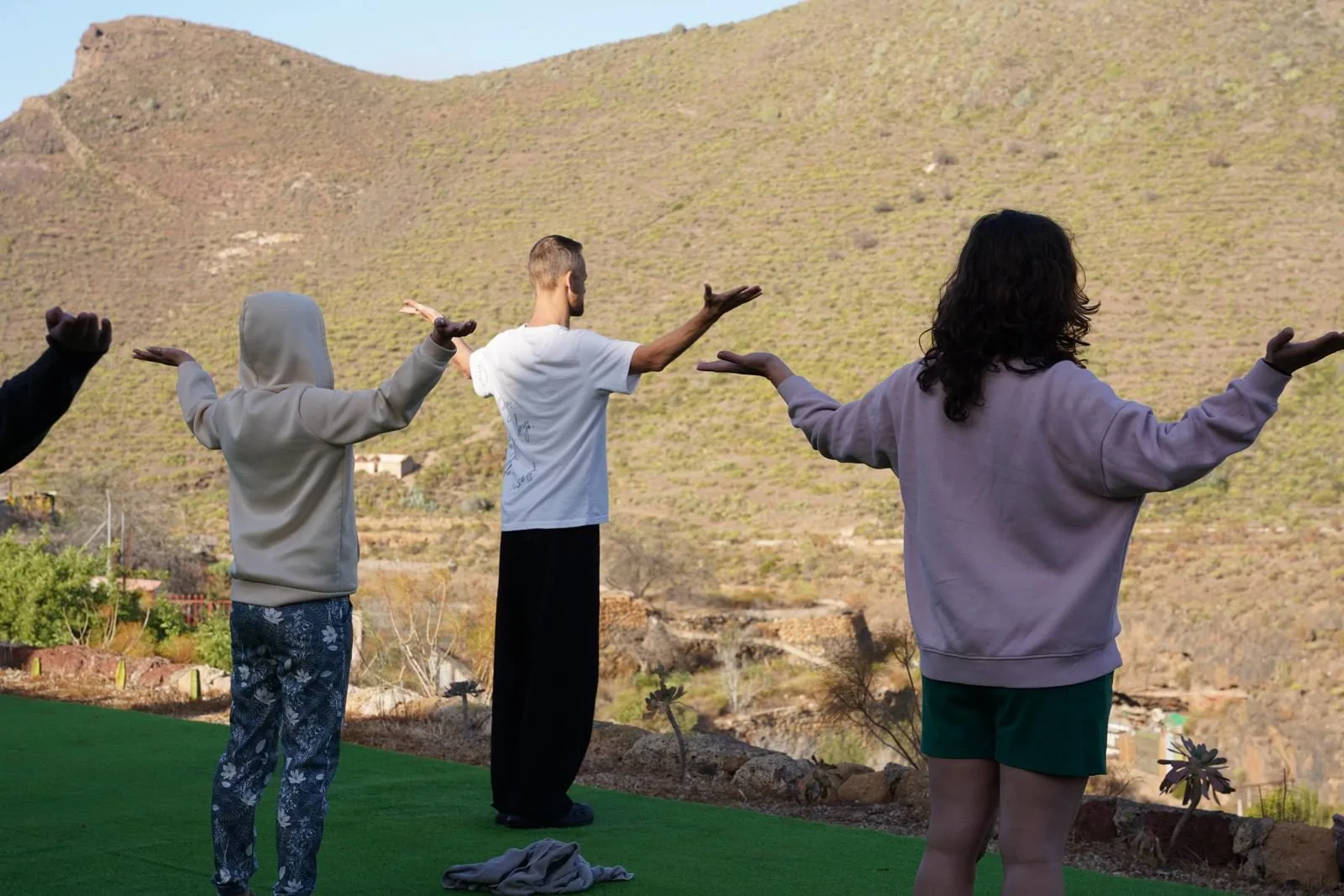
In Qigong and Tai Chi, breathing is not a technique — it is the foundation of all movement. The exhalation accompanies the movement outward. The inhalation the movement inward. The body breathes along.
What fascinates me is that Western science and Eastern wisdom point to precisely the same place — from different directions. The Taoist calls it 'the rhythm of heaven and earth'. The neuroscientist calls it 'vagal activation'. They mean the same thing.
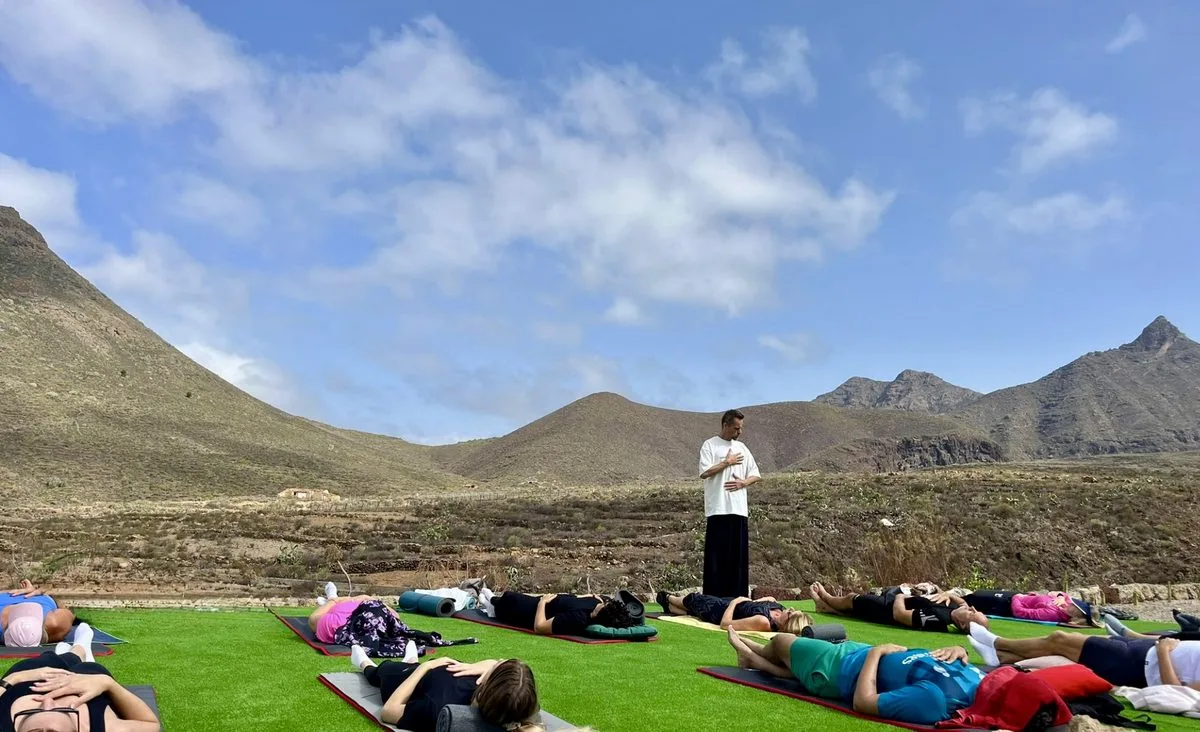
Want to put this into practice? Breathwork is always central in my workshops and personal training sessions. Get in touch or view the workshops.
This is general wellness content, not medical advice. If you have a health condition, are pregnant, or are unsure whether a practice suits you, check with your doctor first.