Nobody teaches you how to walk. You learned it once, as a child, and you never looked at it again — until a kerb catches you out, or the sand shifts under your foot, or you find yourself reaching for the wall in a dark hallway. That is the moment you notice your feet have quietly stopped being automatic.
▶️ The full 20-minute routine, filmed on the coast of Tenerife. Press play and follow along — no experience or equipment needed.
That is not a reason to walk more. It is a reason to walk differently, for twenty minutes.
This is not a walk
Walking is healthy. It is also not balance training, and the difference matters more than it sounds. To train balance you have to shift your weight, stand on a narrow base, and stop leaning on your hands. Ordinary walking does almost none of that — you fall forward and catch yourself, step after step, and your body never really has to choose.
Tai chi walking takes that moment back. You place the foot first, empty, with no weight on it at all. Then, and only then, you give it your weight. That small pause between placing and choosing is where your balance lives, and it is the only idea in this entire routine. Everything else is a way of practising it.
Exercises that genuinely challenge your balance reduce falls — that is one of the best-evidenced findings in exercise science. Tai chi belongs to that family: people who practise it fall less and score better on balance tests. Research finds something quieter alongside it, too. People become less afraid of falling. That counts for a lot, because fear makes you stiff, and stiff makes you less steady.
How the twenty minutes are built
Each block adds one layer to the same step.
- Waking up the joints — neck, shoulders, hips, knees and, most of all, the ankles. Toes pressed into the ground, the ankle circling around them. That is the joint this whole video runs on.
- Stepping to the side — the first taste of it. The weight settles onto the standing leg before the other foot moves anywhere.
- Standing on one leg — feet together, hands on your hips, one knee lifting. Narrow base, weight shifting, no hands to lean on: the three things that make balance work actually work. Keep something solid within reach.
- One step forward — the whole sole lands first and roots, and only then does your weight travel forward.
- One step back — the other order. The toes arrive first, turned in a little. They are your eyes behind you.
- Three steps forward and back — where the single steps become a walk, with the front foot turning out between them.
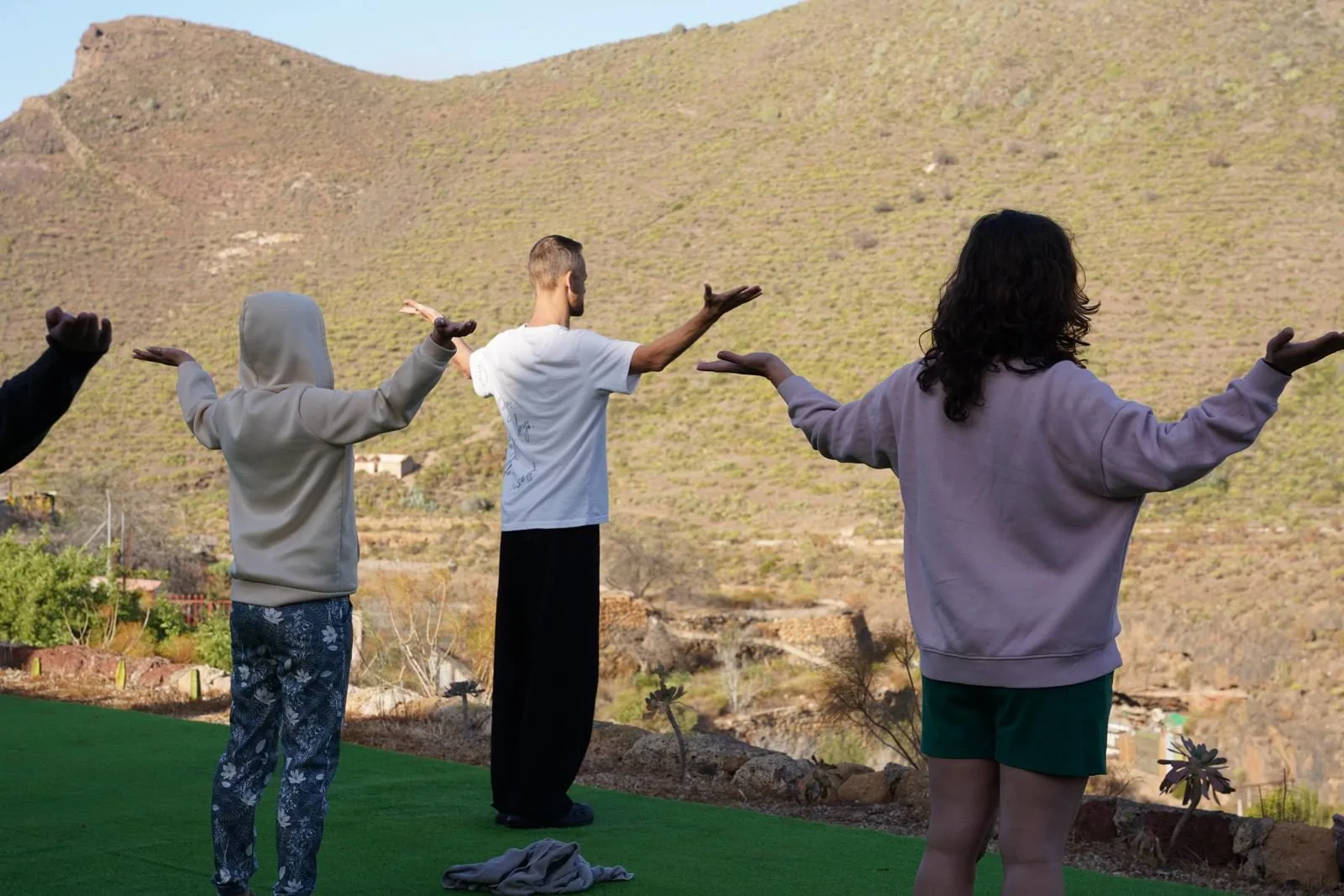
- The arms — push, then repulse the monkey, standing still first, then joined to the step. The hands follow the same rule as the foot: the weight goes first.
- The full walk — everything together, five or six rounds, mostly in silence.
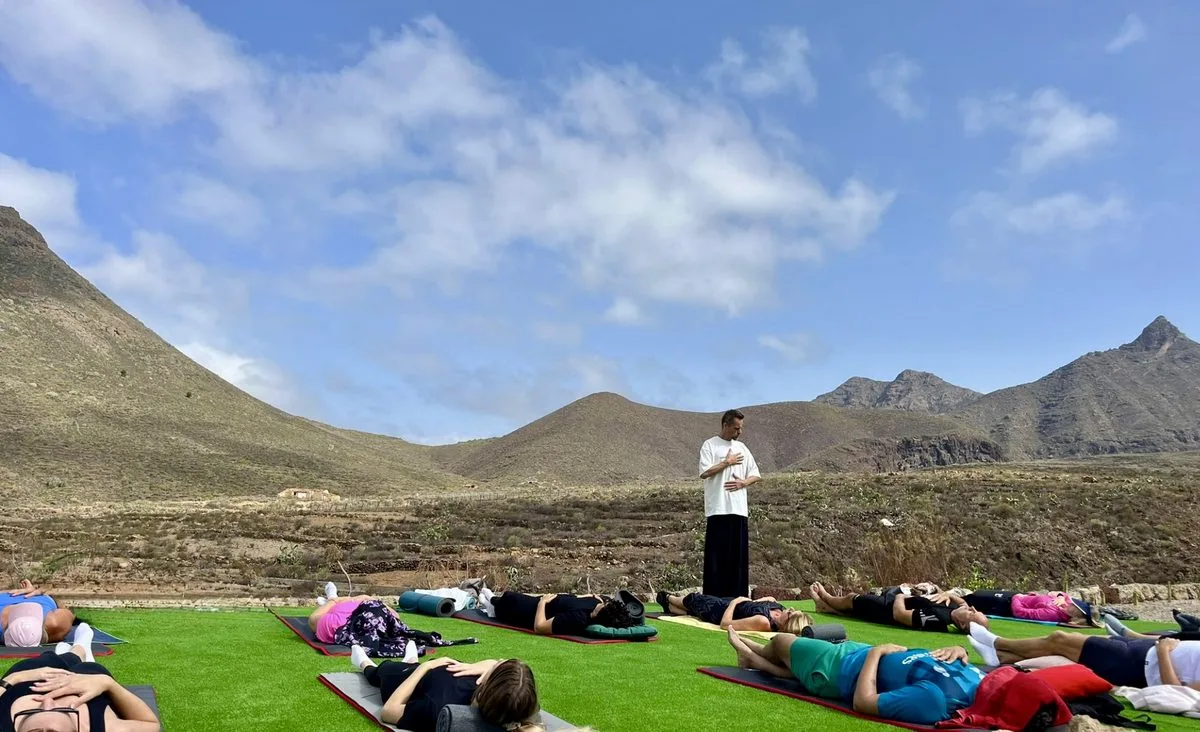
- Standing meditation — a minute of zhan zhuang, letting the walking settle down into your legs.
Before you press play
Bare feet or flat shoes, and a strip of space about three steps long. Choose a flat, clear floor — no loose rugs, not on the stairs and not on a slope. Everything is standing and low impact, made for beginners and for anyone over 50. Keep a wall, a chair or a kitchen counter within reach — using it is not cheating.
One cue matters more than any other: your knee stays above your toes, when you step and when the foot turns. That is the only correction in the video, and it is the one place where getting it wrong can hurt rather than just feel clumsy.
Real change comes from repetition — a few times a week, over months. These twenty minutes are a beginning, not a cure. This is general wellness content, not medical advice: move gently, stay within your own range, and stop if anything hurts or if you feel dizzy or light-headed. And if you have fallen in the past year or feel unsteady on your feet, mention it to your doctor — medication can play a part too.
This routine is one of the free follow-along videos on my YouTube channel MindBodyInMotion — there's a new one every two weeks. More in the same vein: Tai Chi & Qigong Basics. New to Tai Chi? Start with the free 7-Day Tai Chi & Qigong Challenge.