The day is done. The body has stopped, the light is low — and your head is still going. The meeting replays itself, tomorrow arrives early, and the more firmly you tell yourself to let it go, the louder it gets.
▶️ The full 15-minute routine, filmed on the coast of Tenerife. Press play and follow along — no experience or equipment needed.
You cannot order a busy mind to be quiet. So this routine does the opposite: it gives your attention something slow to follow, until the thinking simply fades out of the way. Fifteen minutes, standing, at your own pace.
Why slow circles work when willpower doesn't
Telling yourself to stop thinking is still thinking. Giving your attention a task is something else entirely — and a slow, continuous movement is a very good task, because it never quite finishes.
That is the whole design here. Each block asks for a little more of your attention than the one before: first the breath under your hands, then a balloon under each palm, then a thread of silk drawn up from your legs — and finally cloud hands, where the hands trade places, the eyes follow the upper hand and the weight drifts from side to side. Three things at once, all of them slow. There is no room left for the churning.
Slow breathing measurably calms the nervous system, and gentle movement in the evening is a fine way to end the day. Beyond that, this is a routine to wind down with, not a treatment for anything — and it doesn't pretend to be.
How the fifteen minutes are built
Seven blocks, each one quieter than the last:
- Breath under your hands — hands low on the belly, long easy exhales, a little more of the day released with each one.
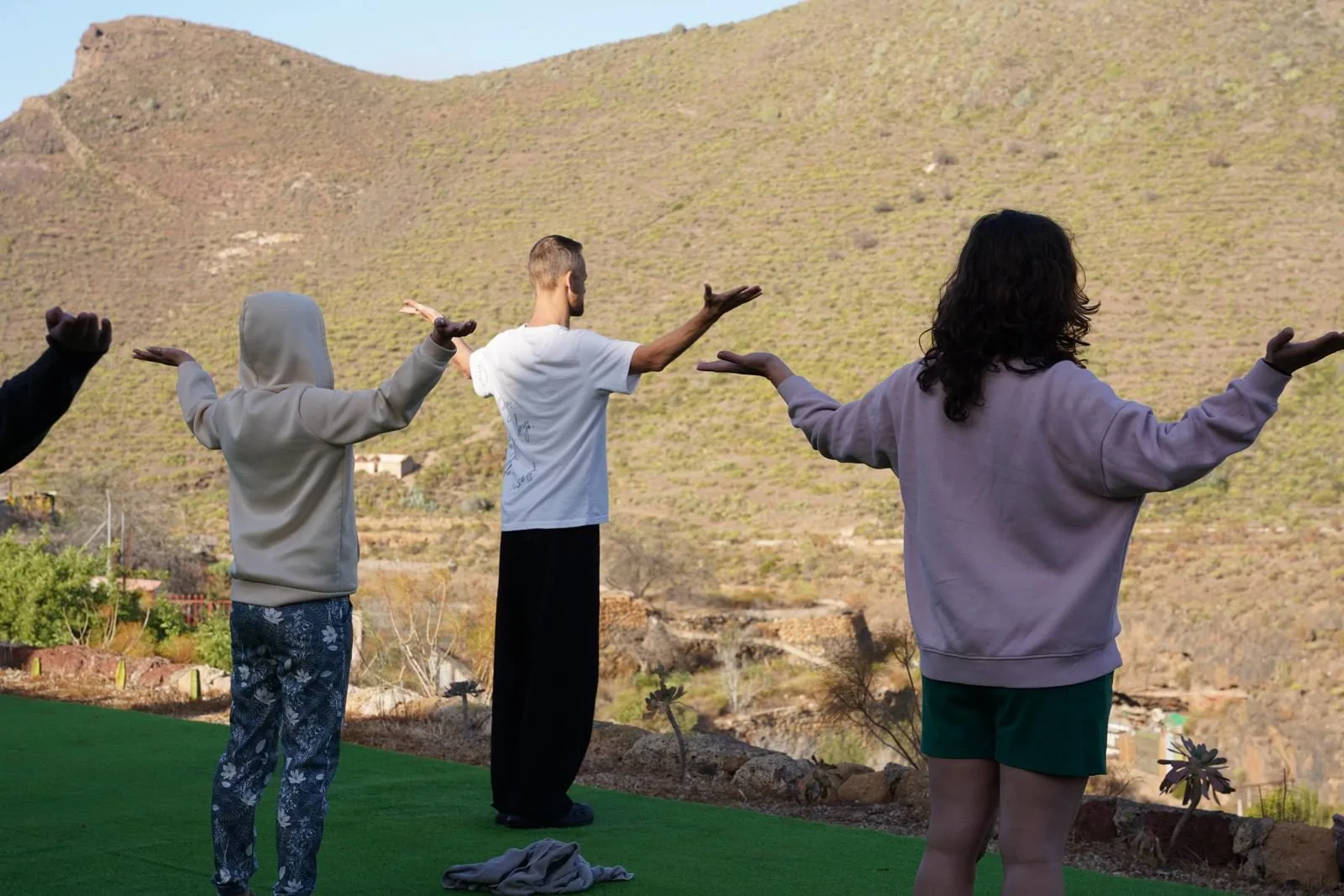
- Opening the wings — arms floating out to the sides and sinking back down, as if a small balloon were lifting each palm.
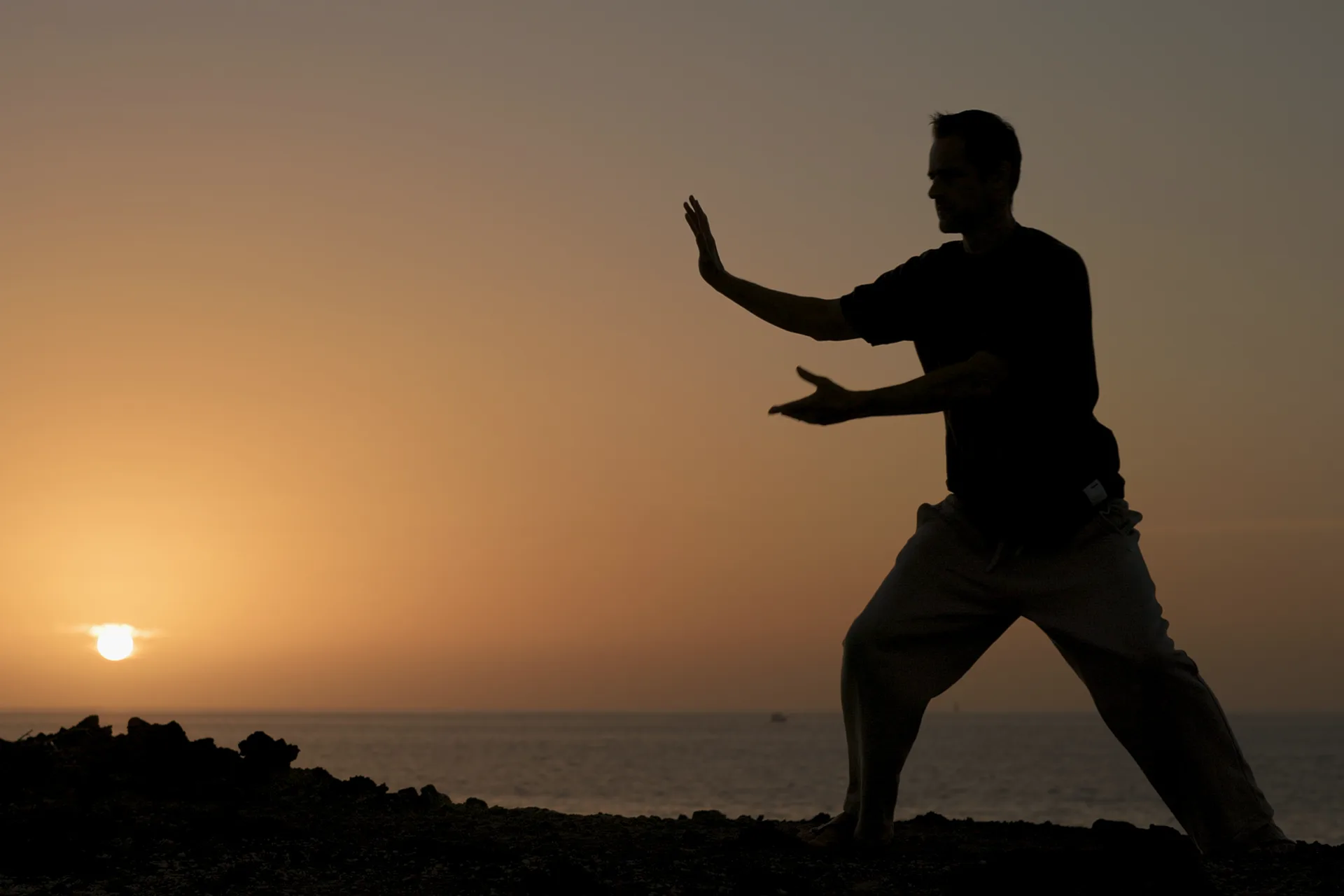
- Silk reeling — a soft horse stance and one arm drawing a slow circle. The circle does not come from the arm; it flows up from the legs, through the waist, into the hand. Rush, and the thread breaks.
- Cloud hands — the classic Tai Chi move, and the heart of the routine. Part of it runs in slow motion, with almost nothing said. This is where people tend to disappear into it.
- Ming Men — warming the lower back with the palms, at the gate of life over the kidneys. In Tai Chi and Qigong this warmth is said to refill what the day has used up. Your lower back simply likes it.
- Coming home to your center — arms open all the way up, palms sinking down the center line, five or six times, slower each time.
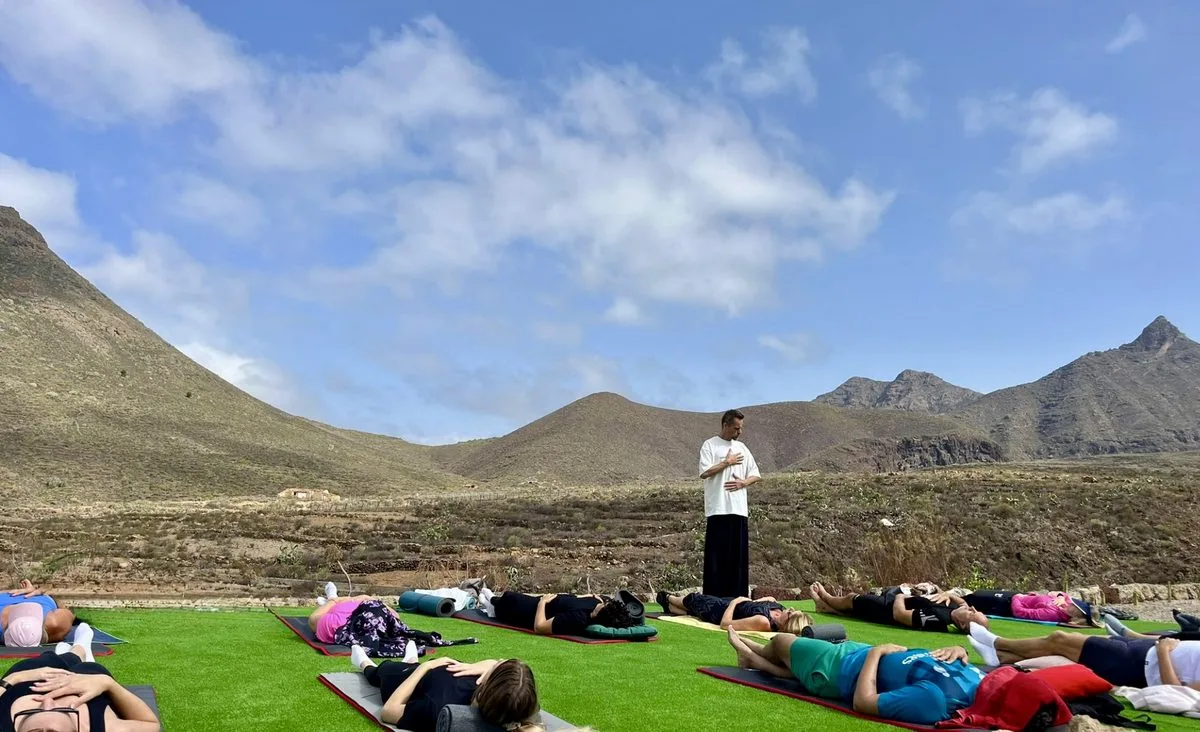
- Standing meditation — hands resting over the center, breathing in for about four counts and out for four. Nothing left to do.
Before you press play
Bare feet or flat shoes, and a space about the size of a mat. Everything is standing and low impact, made for beginners and for anyone over 50 — sink only as far as feels easy, and rest whenever you want to.
Keep the circles small. Big movements give your head room to wander off again; small ones keep the attention close. Three or four evenings a week is plenty.
This is general wellness content, not medical advice. Move gently, stay within your own range, and if anything hurts, stop — and if you are in doubt, check with your doctor first.
This routine is one of the free follow-along videos on my YouTube channel MindBodyInMotion — there's a new one every two weeks. More in the same mood: From Stress to Stillness. New to Tai Chi? Start with the free 7-Day Tai Chi & Qigong Challenge.